Bonnie's journey from fashion design to somatic healing is both unexpected and deeply authentic. Over the course of this rich conversation, she and Alex uncover connections between the Yoga Sutras, Ayurvedic dosha theory, myofascial release, and the neurogenic tremoring process — offering fresh perspectives for practitioners and wellness seekers alike.
Bonnie Pariser's career began at the Fashion Institute of Technology (FIT) in New York City, where she studied fashion design. It was there, through a gym requirement, that she took her first yoga class — a moment that quietly set the course for her life's work. She describes how the skills she developed in understanding how fabric drapes on the body directly informed her later understanding of how fascia drapes inside the body.
After opening Yoga Loca and training extensively with Mukunda Stiles in structural yoga therapy, Bonnie found herself drawn to a weekend training at Kripalu — where she walked into a room showing a video of soldiers in fatigues tremoring on their backs. That chance encounter with David Berceli's TRE method changed everything. The body's spontaneous shaking was something she already recognized from her yoga practice as "kriya," and she pursued her TRE certification with passionate determination.
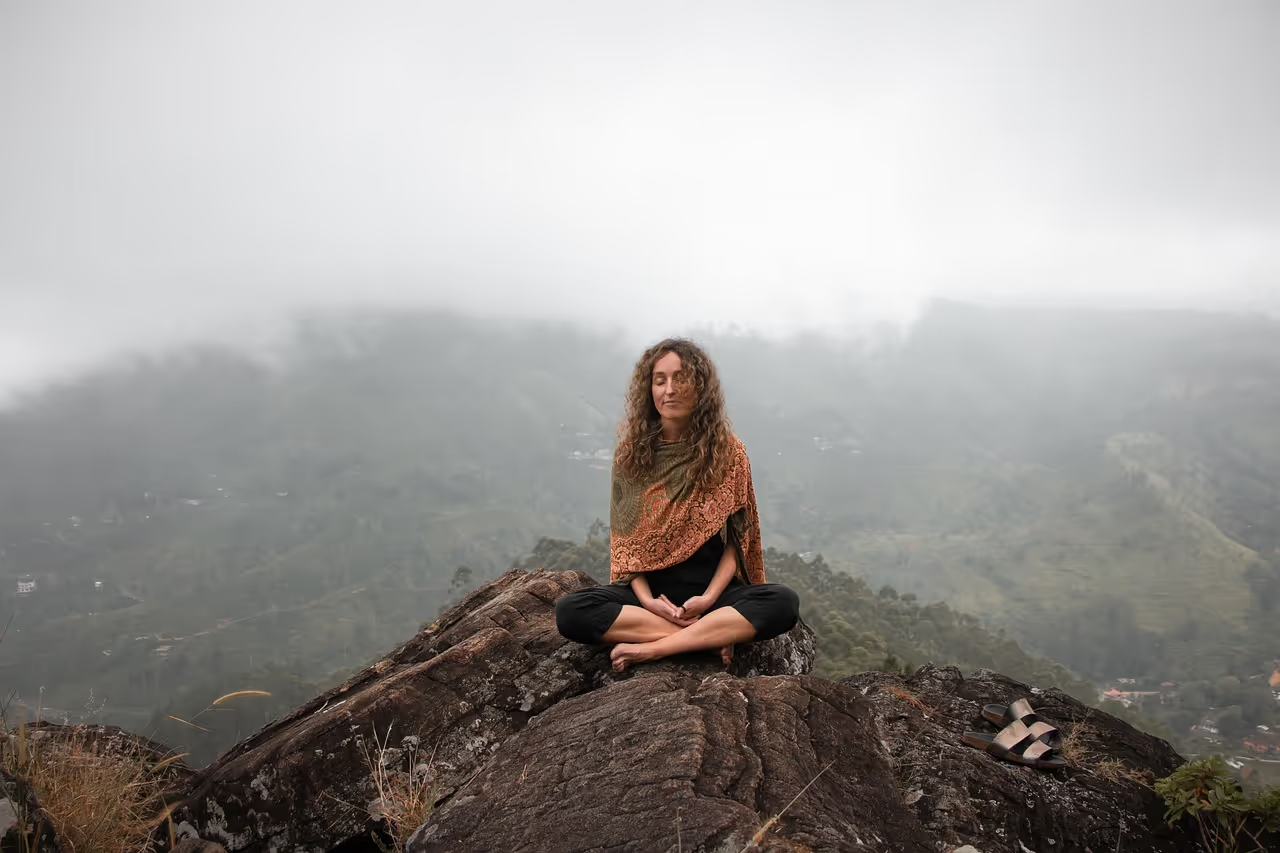
One of the most striking moments in this episode comes when Bonnie describes her experience of tremoring and entering what the Yoga Sutras call "kumbhaka" — a breathless state of complete stillness and unity. After 25 years of dedicated yoga practice, she recognized that neurogenic tremoring could reliably facilitate the same states that Patanjali described as the ultimate aim of asana practice: a comfortable body, a still mind, and a pause in the breath that reveals the true nature of the self.
Alex echoes this observation from his own Zen meditation background, sharing how he introduced tremoring at the start of week-long meditation retreats and found participants shifted rapidly into deep presence and group connection. Both practitioners agree that tremoring offers a remarkably efficient pathway to states that traditionally require years of dedicated contemplative practice — a "hack," as Alex puts it, that doesn't diminish the depth of the experience.
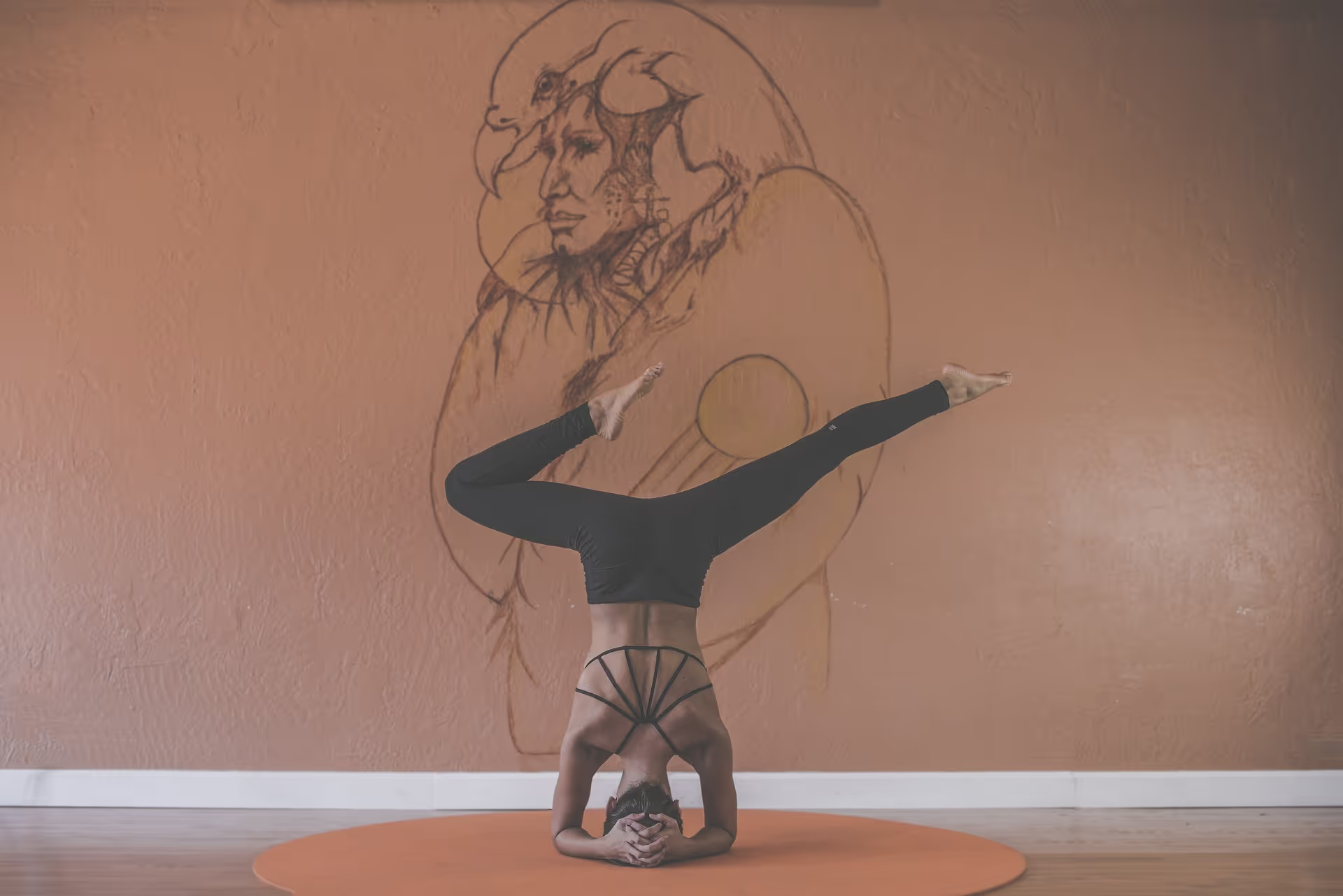
Bonnie has developed a distinctive approach to her group classes at Yoga Loca, combining targeted structural yoga therapy with tremoring sessions that flow into Shavasana (final relaxation). Rather than using the standard TRE warm-up exercises, she uses yoga asana to engage and fatigue specific muscle groups, then guides students into tremoring through a butterfly bridge pose. Her experienced students often begin tremoring spontaneously even before the designated tremoring portion of class.
She also shares her thoughtful approach to inclusion: she never imposes tremoring on anyone. New students always have an out, and she's seen people attend classes for three or four months before deciding to try tremoring — and then becoming "hooked." Her tremoring-inclusive classes have naturally become some of the most popular offerings on her studio schedule, with students reporting the deepest Shavasana experiences of their lives.
Perhaps the most compelling practical application Bonnie shares is her "emotional charge" exercise, used in weekend seminars. Participants are asked to bring to mind someone who irritates them — rated around a five or six on a ten-point scale — and notice where tension, tightness, and discomfort show up in their bodies. After approximately ten minutes of tremoring, participants revisit the same visualization. The results are consistently dramatic: feelings of irritation dissolve, replaced by warmth, compassion, or even a desire to hug the person they had been frustrated with.
Bonnie notes that this shift isn't limited to those who are actively tremoring. As a facilitator, she has experienced the same emotional softening simply by being present in a room full of people tremoring — without lying down herself. She recommends tremoring before difficult interactions, and several of her students have independently adopted the practice, tremoring in their cars before entering work environments or before visiting challenging family members.
Bonnie offers a unique framework by viewing her clients through an Ayurvedic lens. She describes how her teacher Mukunda Stiles taught her to assess not a client's constitutional dosha, but the dosha state that is actively "deranged" or unrefined in the present moment. Vata — associated with the air element, anxiety, fear, and physical bracing — is the most common presentation she sees. She likens it to driving with the parking brake engaged: the body is capable of movement, but held tension prevents it.
Where conventional yoga therapy might prescribe a 40-minute joint-freeing series to gradually lower Vata, TRE offers a more accessible and time-efficient alternative. Bonnie describes how tremoring can rapidly transform the body from "a block of ice into softened butter," releasing the bracing patterns that prevent therapeutic exercises from being effective. This insight — using tremoring as a gateway to enable other therapeutic work rather than just as an end in itself — represents a valuable paradigm shift for practitioners.
Bonnie connects the yogic concept of kriya — a spontaneous purification or energetic discharge — to the tremoring response. She traces the lineage from her teacher Mukunda Stiles, who was a disciple of Swami Muktananda (known for touching people with a peacock feather and triggering spontaneous shaking), through to her own TRE practice. This perspective positions TRE within a much broader historical and cross-cultural tradition of healing through spontaneous body movement.
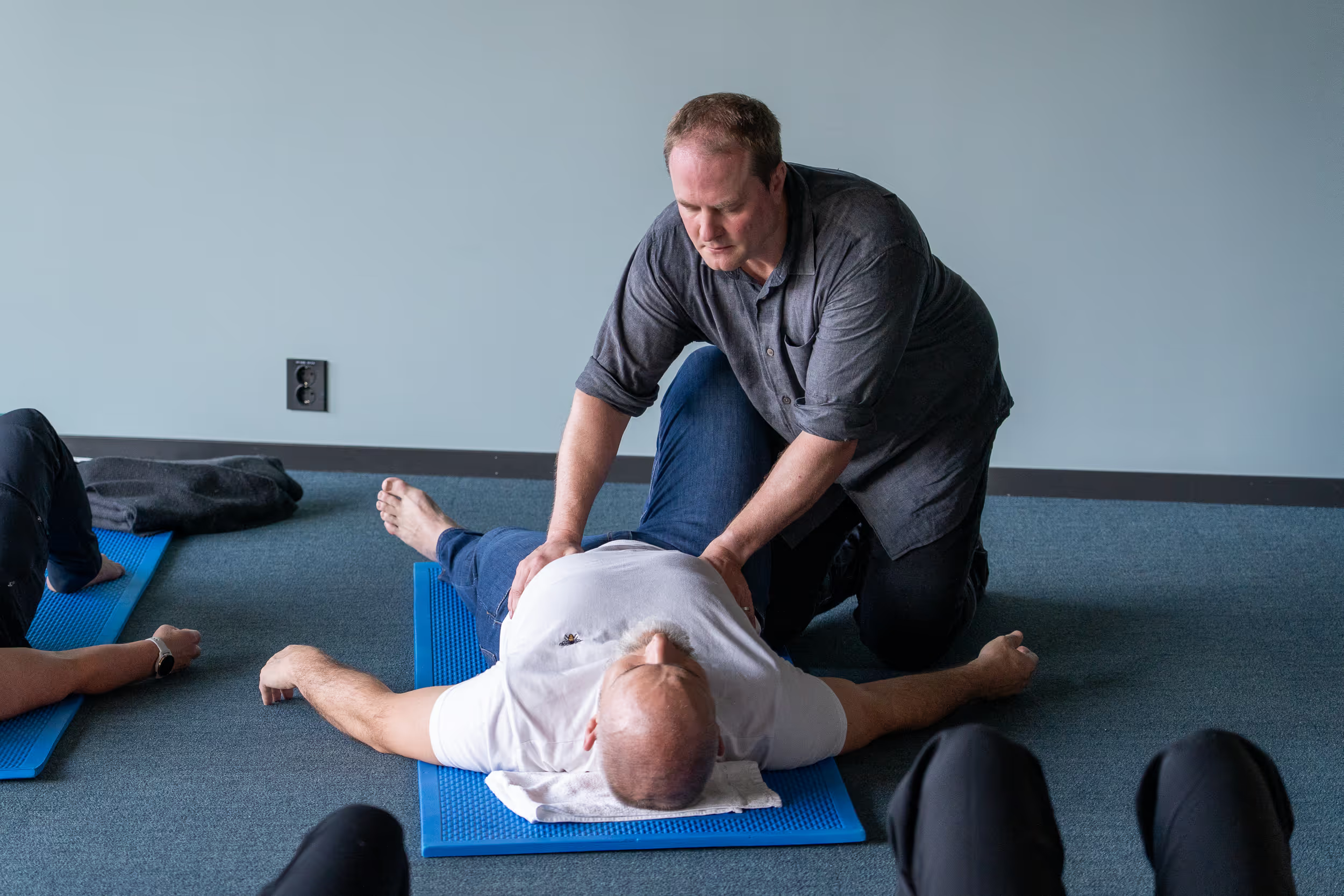
Looking ahead, Bonnie is excited about integrating John Barnes' myofascial release techniques with her TRE practice. She describes the MFR rebounding technique — rocking the body like "a barrel of water" — and her humbling experience of discovering that even as an experienced tremorer, her body responded to rebounding in completely unexpected ways. This spirit of continued curiosity and exploration, bridging ancient practices with modern somatic approaches, captures the essence of what makes her work so compelling.
Bonnie Pariser's conversation with Alex Greene reminds us that the body's capacity for spontaneous healing has been recognized across cultures and traditions for thousands of years — from the Yoga Sutras to Swami Muktananda's peacock feather, from martial arts training halls to modern TRE sessions. What TRE offers, as both Bonnie and Alex articulate so well, is a reliable, accessible methodology for inviting this innate healing response. Whether approached through a Western neurobiological lens or through the wisdom of Ayurveda and yoga philosophy, the body's tremoring mechanism is a powerful bridge to physical freedom, emotional ease, and spiritual depth. Listen to the full episode for the complete conversation and discover how these traditions can enrich your own healing journey.

Book a Free consult here



.avif)
%20(2).avif)


%20(1).avif)

.avif)

.avif)
.avif)