What happens when a pioneering trauma therapist brings body-based healing to communities affected by conflict and war across East Africa? In this powerful episode of the Neurogenic Integration Podcast, host Alex Greene speaks with Mary Gitau, a Nairobi-based psychologist, suicide prevention specialist, and somatic practitioner who has been transforming trauma recovery in Kenya, Somalia, Somaliland, Sudan, and South Sudan. Mary's journey from her own childhood trauma to becoming a leader in bringing TRE (Tension and Trauma Releasing Exercises) to East African communities offers profound insights into the universal nature of somatic healing and the critical importance of cultural adaptation. Her work demonstrates how body-based approaches can reach populations that traditional talk therapy cannot serve, particularly in cultures where discussing emotions openly is restricted or stigmatized.
Mary's path into psychology began with her own childhood experiences of trauma, abandonment, abuse, and rejection. When she sought help as a child, she encountered a therapist who accused rather than supported her—an experience that planted the seed for her life's work. She recalls thinking, "When I grew up, I want to study psychology and be able to support other children who people do not want to listen to."
After initially pursuing human resource management and working in an airline company, a pivotal moment changed everything. When a flight attendant died by suicide three weeks after termination, Mary realized she needed to return to her original calling. She pursued psychology and then specialized in suicidology—the study of why people take their own lives. However, even with this training, she noticed something critical: her clients were getting re-traumatized through traditional talk therapy approaches. "The more they keep talking, the more it becomes intense for them," she observed.
This realization led Mary on a quest to discover what existed beyond cognitive approaches. Through internet research, she discovered bioenergetics, which introduced her to working with energy in the body. But it was TRE that provided the missing piece—the concept of integration through the tremor mechanism. For Mary, this wasn't just a professional discovery; it became her personal breakthrough and the foundation of her healing work across East Africa.
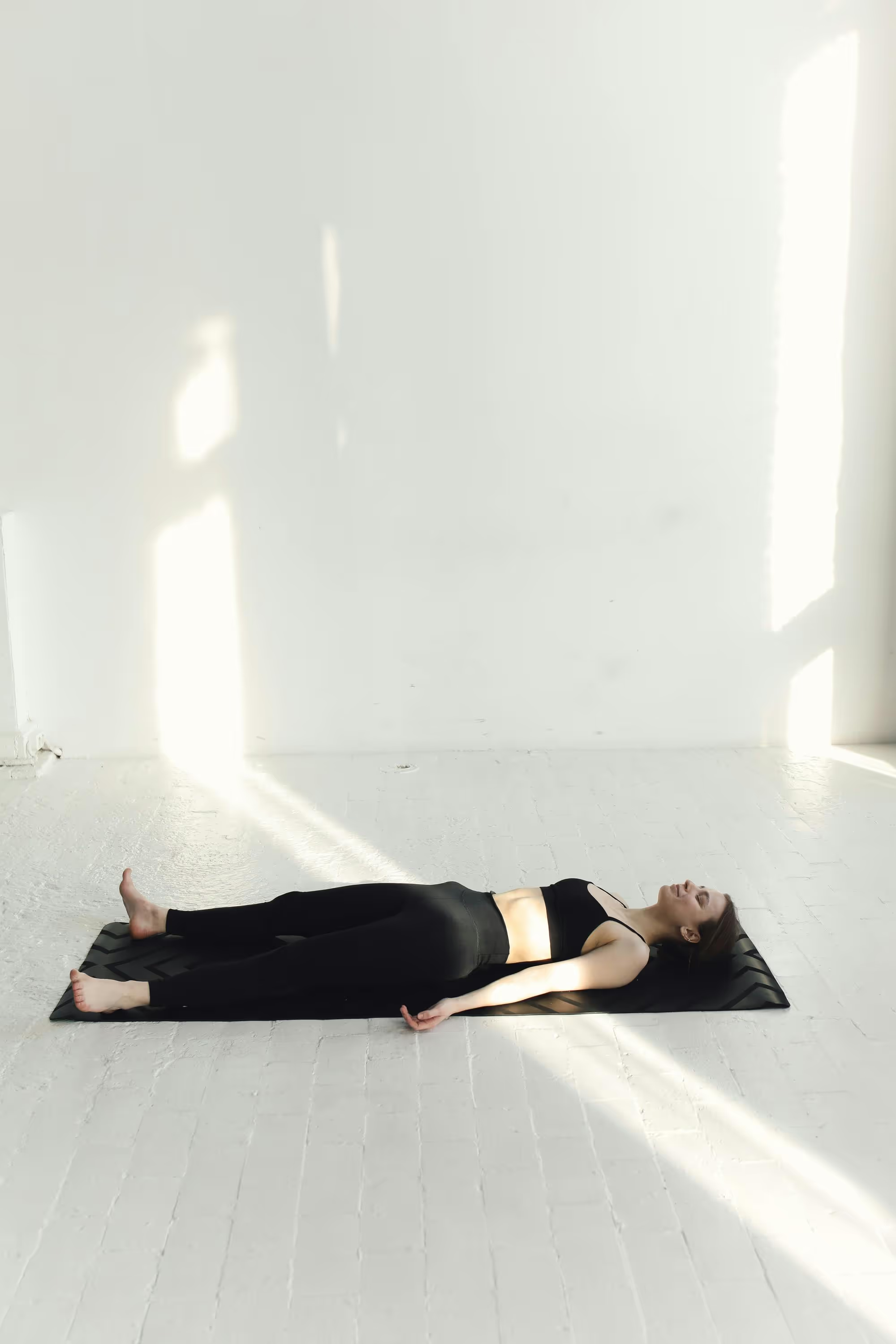
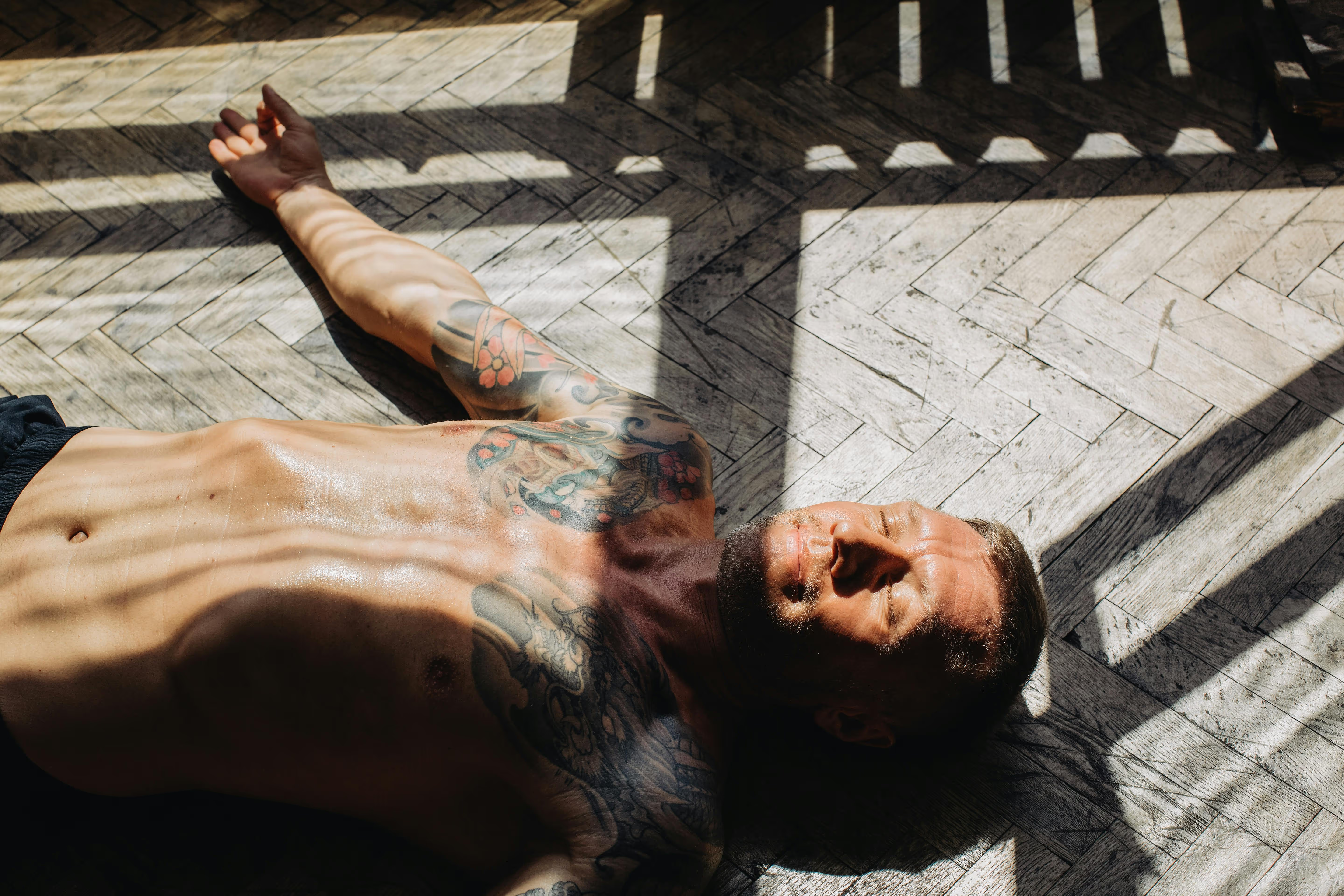
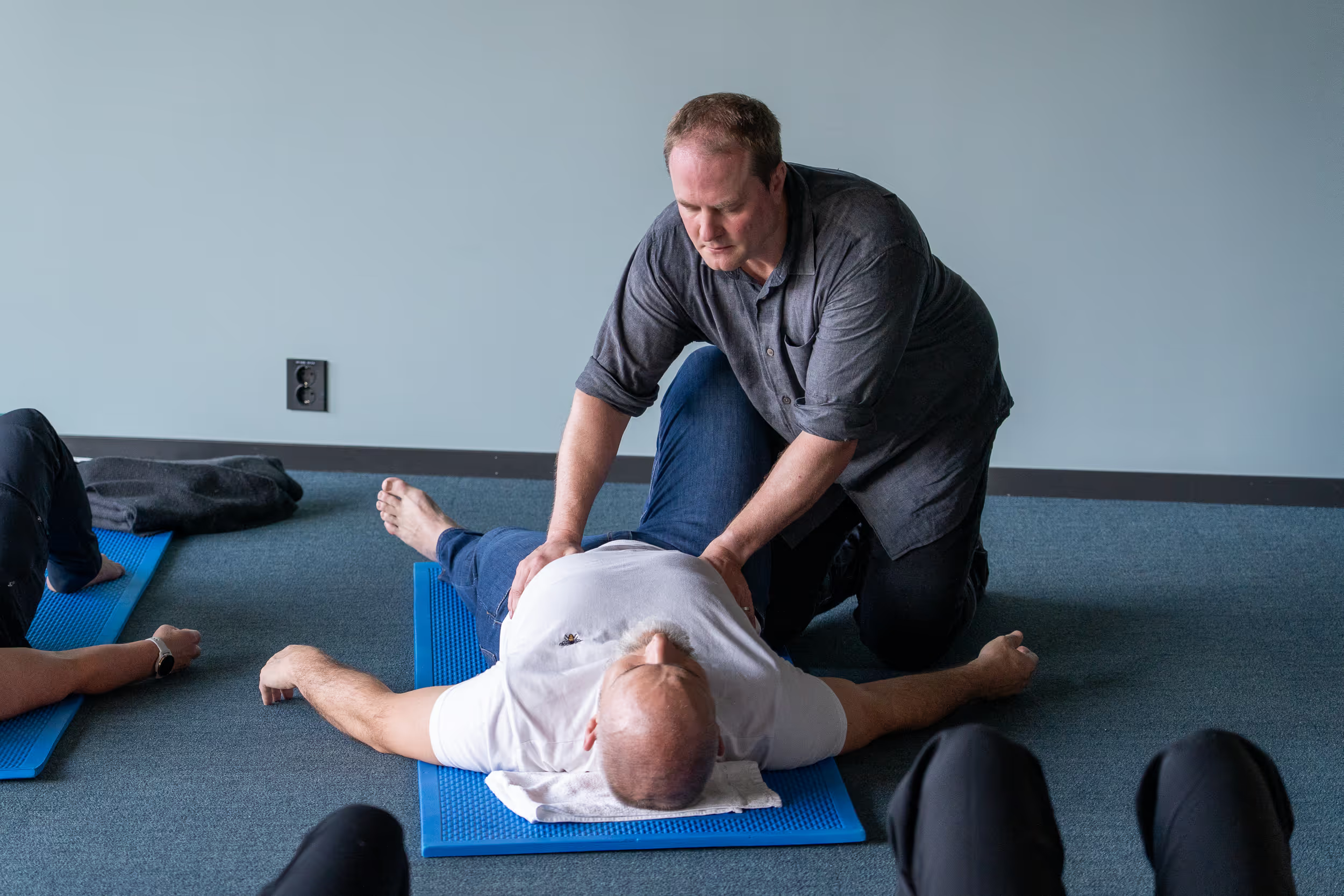
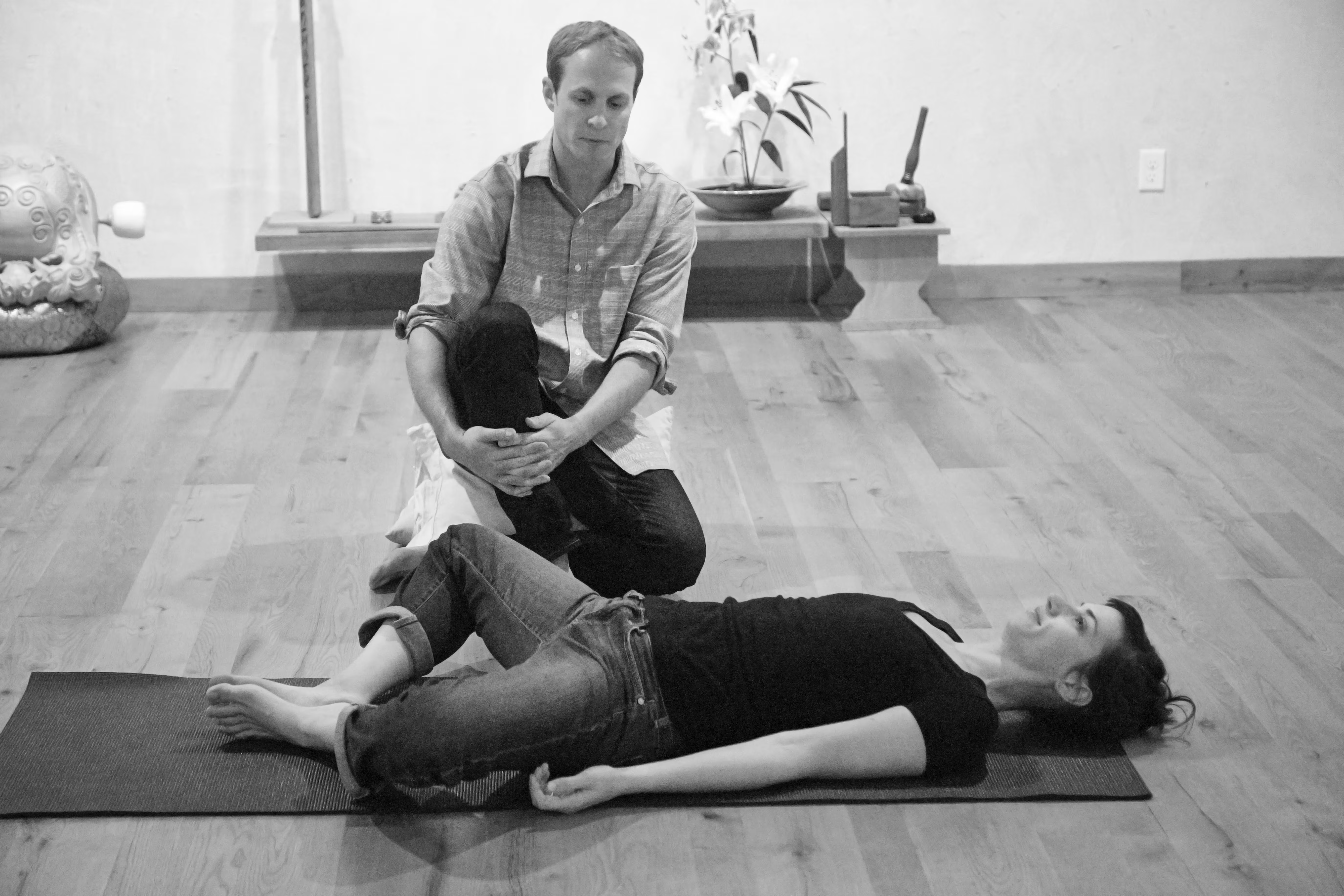
During the 2021 online TRE training with Dr. Berceli and Alex Greene, Mary had a profound personal experience that would shape her entire approach to trauma work. While lying on the floor during a session, a memory of abuse surfaced unexpectedly, bringing with it intense nausea. She recalls feeling shocked, annoyed, and triggered. What made the difference was Alex's gentle guidance: "Just stay there, Mary. Notice. Don't be in a rush. What do you need to be safe?"
Through that experience, Mary discovered something remarkable about her body. "I noticed that my lower part of the body was kind of loosening up," she shares. "I started to feel flexible and for a long time I never even realized I was stuck in that space. My body here, the pelvis area was really stuck." The session allowed her body to access and process trauma that had been held for years, even though no one mentioned anything specific and they were simply doing the exercises.
This personal breakthrough became transformative for Mary's practice. She now maintains a daily TRE practice, doing 15 minutes of wall work unless she's traveling. Her eight-year-old daughter has even become her accountability partner, regularly asking, "Mommy, have you done your TRE today?" This personal relationship with the practice gives Mary authentic authority when introducing it to others, and she understands firsthand the patience and safety required for deep healing to occur.
Mary's first professional application of TRE happened in a group setting with the Somali community in Nairobi—people who had been brought to the city due to war in Somalia. Working through a connection made on Twitter, Mary arrived late to a hotel where a humanitarian team was gathered. With only one hour available at the end of the day, she introduced TRE to approximately 18 people who had heard about this approach but had never experienced it.
What happened next demonstrated TRE's unique power to reach populations that traditional therapy cannot. In cultures where male figures typically don't discuss emotions openly, the body-based approach offered an alternative pathway. "This is a community where men, especially the male figures, do not get to talk about their emotions," Mary explains, "but they allowed me to support them by us engaging in the series of exercises."
One particular man's experience was especially moving. After the session, he told Mary that he had slept "like a teenager" that night—something he hadn't experienced in years. When they explored what happened, he described feeling his body working and engaging in a way that was both unexpected and pleasurable. "There was a sweet feeling, there was some movement in the body that they've never experienced in their lives," Mary recounts. This first encounter led to ongoing work with these communities, with Mary traveling to Somalia, Somaliland, Sudan, and South Sudan to continue supporting them through TRE.
As Mary completed her three-year Somatic Experiencing (SE) training near the end of this podcast recording, she reflects on the journey of integrating multiple body-based modalities. Initially, there was confusion and internal conflict. Watching someone tremor in a TRE session and then being taught in SE to "stop" the process created dissonance. "I was like, wait, you just can turn someone stop," she recalls with some bewilderment.
However, through patient personal practice and self-exploration, Mary came to understand that these approaches don't compete—they complement each other. "They actually do not compete, but they complement each other," she affirms. The key was allowing herself to experience both modalities deeply and noticing how they support different aspects of nervous system healing.
In her current practice, Mary has developed the flexibility to recognize when each approach is most appropriate. Some clients come specifically requesting TRE, and she honors that. Other times, she might begin with Somatic Experiencing to build a foundation of safety and nervous system awareness before introducing tremoring. As Alex shares from his own practice, there's often a fluid movement between sitting work and floor work, between conversation and tremoring, between titration and discharge. This integrated approach allows Mary to meet each client where they are and provide the most appropriate support for their unique nervous system needs.
One of the most critical aspects of Mary's work is her commitment to contextualizing TRE for different cultural settings. This isn't simply about translation—it's about deep adaptation that respects and works within local beliefs, practices, and sensibilities. In African cultures where concepts like exorcism are familiar, the shaking of TRE could easily be misunderstood. "When you're telling someone that they're getting into a TRE mechanism, they're like, oh, wait, whatcha trying to do?" Mary explains. The concern is that it might be perceived as exorcism rather than nervous system regulation.
Mary's approach is to take time building understanding and safety before introducing the tremoring itself. She explains the concept thoroughly, connecting it to familiar experiences like observing farm animals who naturally shake after stress. She asks clients to notice what happens with animals in their villages when they experience threat. This bridges traditional knowledge with somatic awareness, making the practice accessible and trustworthy.
Cultural adaptation also extends to practical matters. When working in Somalia, Mary always brings blankets so that both women and men can feel comfortable and appropriately covered during sessions, respecting local modesty customs. She adapts her approach for different age groups, genders, and situations. For pregnant women, she offers chair-based variations. The flexibility of TRE allows her to meet people where they are, whether that's in her office, in their homes, in outdoor spaces, or even in group settings across different countries.
While Mary celebrates TRE's accessibility and the way it can spread through online videos, she also sees the dangers of people practicing without proper guidance or understanding of safety principles. She has worked with clients who found TRE videos online, tried them independently, and ended up in distress because they pushed too hard or lacked the framework for self-regulation.
One particular client came to Mary in a severely dysregulated state after misusing TRE practices. When he expressed wanting to "heal now," Mary had to explain that the very urgency driving him was part of the problem. "You went there too fast, that's what created the problem in the first place," she told him. "Now we'll also have to allow ourselves to journey together to get out of that space that you got yourself into." This requires patience, re-establishing safety, and sometimes stepping away from TRE temporarily while building nervous system capacity through other approaches.
The challenge reflects a broader issue in trauma healing: the desire for quick fixes when deep healing requires time, safety, and proper support. Mary sees younger people especially drawn to online resources as psychotherapy becomes increasingly expensive, but without guidance, they can hurt themselves. Her response is twofold: educating her clients about the importance of reaching out if they feel they're doing too much, and working toward a future where her organization (CSRI) can offer free or low-cost group classes to provide that critical foundation of safety and proper instruction.
Mary Gitau's work represents the heart of what makes somatic healing so powerful and necessary in our world. By bringing TRE to conflict-affected communities across East Africa, she demonstrates that trauma recovery doesn't have to be limited to those who can afford expensive therapy or who live in Western contexts. Her commitment to cultural adaptation shows deep respect for the communities she serves while honoring the universal nature of the body's capacity to heal.
Through her personal practice, her clinical work, her travels to Somalia and Sudan, and her vision for making TRE accessible through her organization, Mary embodies the possibility of trauma healing that transcends language, culture, and economic barriers. Her story reminds us that the body's wisdom is universal, even as the pathways to accessing that wisdom must be adapted for each unique cultural context. For anyone interested in somatic healing, cross-cultural trauma work, or the practical application of TRE in diverse settings, this conversation offers invaluable insights and inspiration.
Listen to the full episode to hear Mary's complete story and learn more about bringing trauma healing to communities that need it most.

Book a Free consult here
.png)
.avif)
%20(2).avif)


%20(1).avif)

.avif)

.avif)
.avif)