
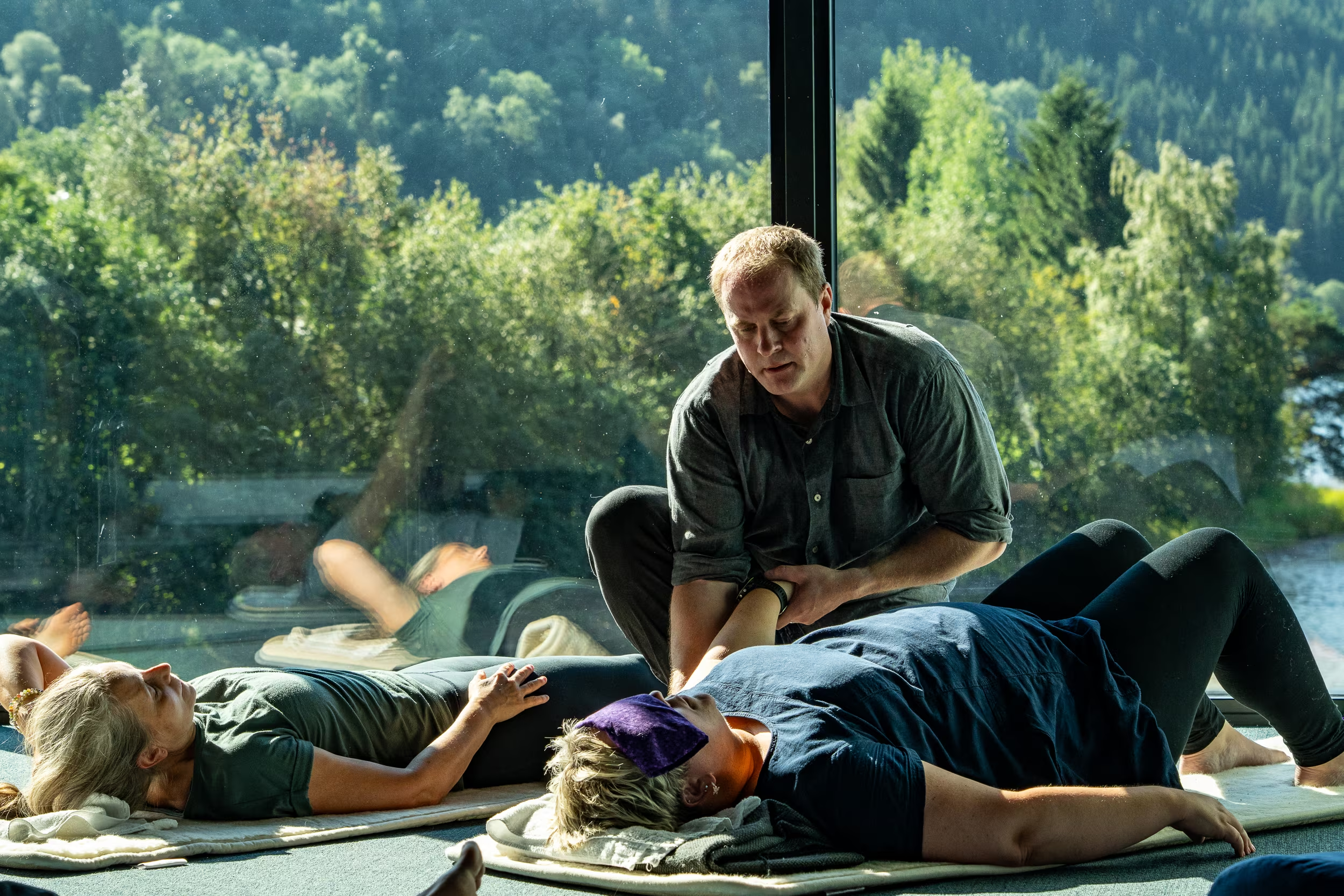
If you've felt the shift that comes from a good tremoring session — the way the nervous system settles, the way the body seems to exhale — it's natural to wonder whether you could offer that to other people. Maybe you're a therapist, a bodyworker, a yoga teacher, or a coach looking to add a somatic tool to your work. Maybe you simply love this practice and want to take it as far as it goes.
Either way, the path runs through certification. This guide walks through what TRE is, what it actually takes to become a certified TRE provider, what training looks like, and how to choose a program that prepares you to hold this work safely and well.
TRE — Tension and Trauma Releasing Exercises — is a body-based practice developed by Dr. David Berceli that activates the body's natural neurogenic tremor reflex. Through a short sequence of exercises, the body is invited into a gentle, self-regulated shaking that helps release deep patterns of tension and supports nervous system regulation. It's the same involuntary trembling you might notice after a near-miss in traffic or a hard cry — a built-in mechanism for discharging stress, here made deliberate and trainable.
People come to TRE for stress, the after-effects of trauma, chronic tension, burnout, and a deeper sense of connection with their own bodies. If you want the longer explanation of how the practice works, our overview of TRE is a good place to start. This guide assumes you already know the practice and want to learn to facilitate it.
Becoming a certified TRE provider means you've completed a recognized training pathway and demonstrated that you can guide others through the practice safely, ethically, and with real nervous-system literacy. The globally recognized credential is the Certified TRE Provider designation, awarded through TRE For All's Global Certification pathway — the organization Dr. Berceli founded to steward the method.
It's worth being clear about one thing up front: certification is not granted by paying a fee or simply attending a training. It reflects demonstrated readiness — your own embodied practice, your ability to track what's happening in another person's nervous system, and your capacity to work within clear ethical and safety boundaries. That's a feature, not a hurdle. TRE facilitation is a privilege and a responsibility, and the rigor is what makes the credential mean something.
TRE certification tends to attract two kinds of people, and both are welcome:
If you see yourself in either description, you're in the right place.
A well-built certification program develops competence and confidence together, over time, rather than in a single weekend. The strongest programs train you across five areas:
Before you facilitate anyone, you need a relationship with the practice in your own body. Most pathways begin with a foundational module that grounds you in the science and helps you build a sustainable personal practice.
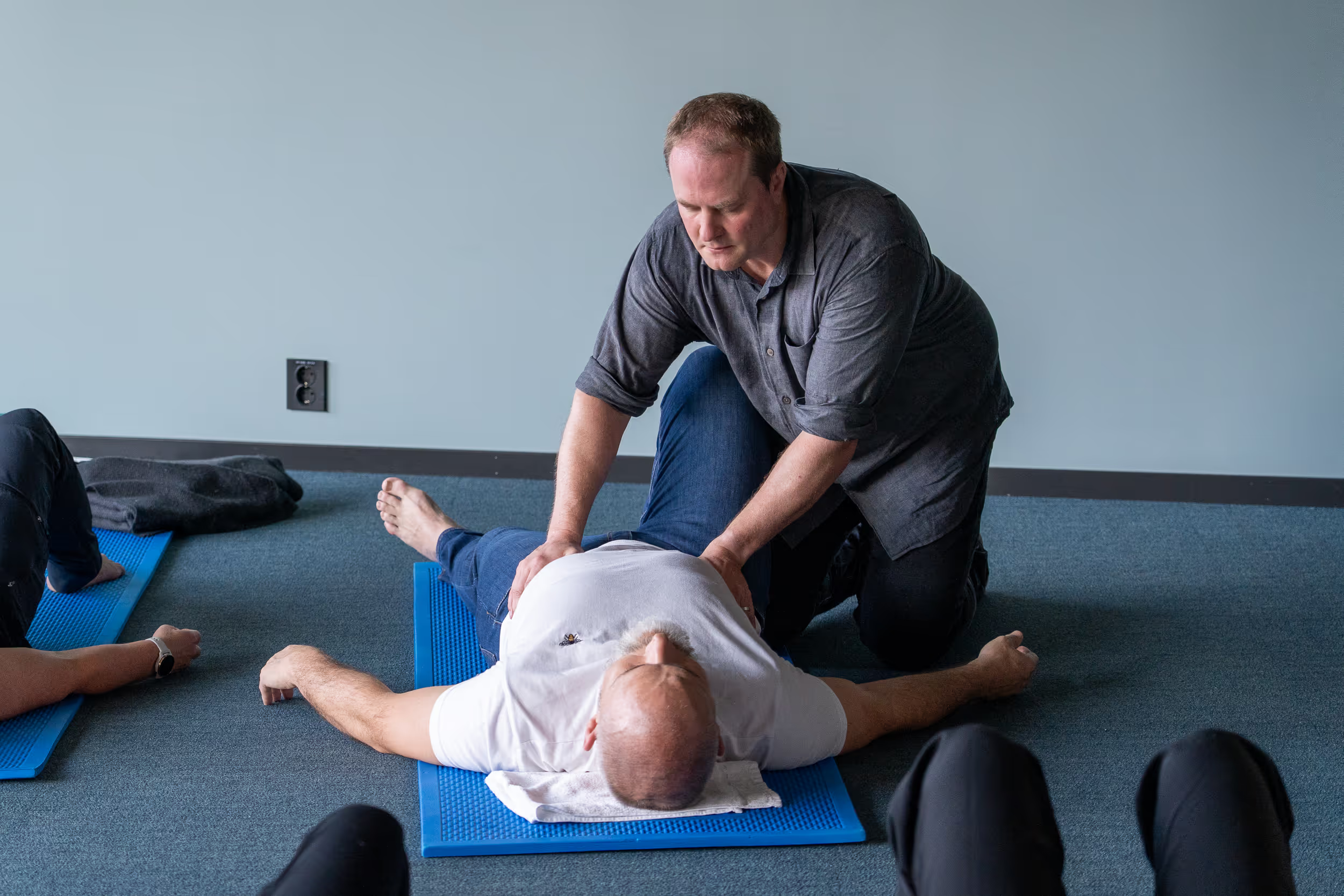
Next you move from your own practice into guiding one person at a time. This is where you learn to follow the organism rather than a script — to recognize and respond to freeze, flooding, and dissociation, and to adapt the exercises for different bodies and needs, both in person and online.
Leading a group is a different skill than working one-to-one. The final stage develops your ability to hold safe, effective group containers and to navigate the relational and ethical dynamics that come with them.
Throughout, you receive supervised sessions and video reviews, and you complete a final evaluation. Certification follows when you've demonstrated you can do this work safely and well.
Timelines and prices vary by program. A thorough, supervised certification typically unfolds over several months and includes live training, personal sessions, video review, and course materials. Costs generally range from a few hundred dollars for an introductory module to a few thousand for full certification with supervision included. When you compare programs, look past the sticker price to what's actually included — supervision hours, personal sessions, and ongoing support are where the real learning happens.
A few questions worth asking before you enroll anywhere:
Ready to become a certified TRE provider?
Our partner organization, Neurogenic Integration, runs a rigorous, supervised TRE Certification on TRE For All's Global Certification pathway — endorsed and approved by Dr. David Berceli. It's led by Alex Greene (Red Beard's founder), Dr. Siv Jøssang Shields, and Ellen McKenzie, and is organized into three modules across 2026–2027: Foundational Knowledge (Aug 12–14, 2026), Individual Facilitation (Oct 14–16, 2026), and Group Facilitation (Jan 13–15, 2027).
Tuition for the full certification is $3,200 early bird (by July 1, 2026) or $3,400 after, with a 10-month payment plan available. Prefer to dip a toe in first? Module 1 is open to everyone at $450 and stands on its own as a foundations course. Applications close August 1, 2026.
Explore the TRE Certification and apply →
Frequently asked questions
Can anyone become a certified TRE provider, or do I need to be a licensed therapist?
You don't need a clinical license to begin the TRE certification pathway. Many providers are therapists, bodyworkers, and yoga teachers, but dedicated personal practitioners are welcome too. What matters is a committed personal practice and the willingness to learn to facilitate safely.
Where can I get TRE certification?
TRE certification is awarded through TRE For All's Global Certification pathway. Neurogenic Integration offers a fully supervised live online certification on that pathway, endorsed by Dr. David Berceli. You can see the program and apply here.
Is there a TRE certification I can do online?
Yes. Reputable programs now run live online cohorts that combine group learning, supervised personal sessions, and video review. The Neurogenic Integration cohort is fully online, with live modules scheduled across 2026–2027.
How long does TRE certification take?
Full certification with supervision typically unfolds over several months. The Neurogenic Integration pathway spans three live modules from August 2026 to January 2027, plus personal sessions and video reviews in between.
Wherever you train, the goal is the same: to be the kind of provider who can offer this work with genuine steadiness and care. If that's the path you're feeling drawn to, we'd love to help you walk it.

Book a Free consult here



.avif)
%20(2).avif)


%20(1).avif)

.avif)

.avif)
.avif)